The Rise of “Circle to Search” in Shopping: How to Optimize for Visual SEO in 2026
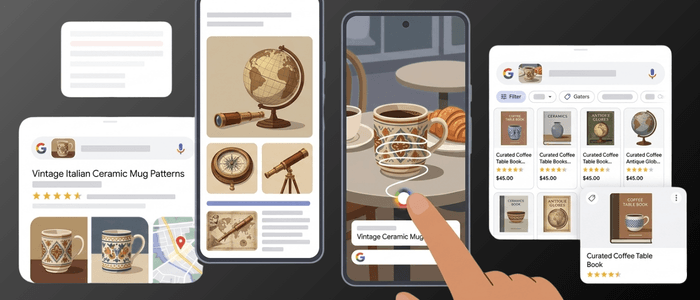
Imagine this: you’re scrolling through social media, you see a pair of great sneakers in a video… and instead of searching with words, you simply circle the product with your finger.
Within seconds, you get links to stores, prices, and similar items. This isn’t the future — it’s the reality in 2026.
If you run an online business or an ecommerce site, the question is no longer “if”, but “when will you adapt?”
In this GrowEasy article, we’ll break down how “Circle to Search” is changing the rules of SEO — and how you can take advantage of it starting today.
What is “Circle to Search” and why is it changing SEO?
“Circle to Search” is a feature that allows users to search directly through images or video — without typing keywords.
This means traditional SEO, based only on text, is no longer enough.
Think about it: when someone circles a product in an image, algorithms don’t “read” text — they rely on visual signals, metadata, and context.
This is a fundamental shift in how your content gets discovered.

And here’s the key question:
If your products aren’t visually optimized, can they even be found?
Visual search is dominant in 2026 — what does this mean for you?
Not long ago, users searched for “buy black sneakers.” Today, they simply circle the sneakers they see on TikTok or Instagram.
This shift leads to three major consequences:
- Attention moves from text to image
- Social media becomes a primary traffic source
- If your product isn’t visually recognizable, it doesn’t exist for this type of search
SEO in 2026 is no longer just blog content and keywords.
It’s a combination of visuals, context, and technical optimization.
Text isn’t dead — it becomes context
Let’s clarify something important: text isn’t disappearing from SEO — it’s evolving.
Google doesn’t “see” images like humans do. To understand what’s in a photo, it relies on surrounding text signals:
- Product descriptions
- Attributes
- Alt tags
- Reviews
- Page context
In other words, “Circle to Search” isn’t magic. It’s a system connecting visual pixels with the text data you provide.
If your text is weak or missing, even the best image can remain invisible.
But when you combine strong visuals with structured text, you create something powerful.
Visual SEO is the bridge between what users see and what data you provide to Google.
The most important visual SEO factors (you can’t ignore)
If you want to appear in visual search results, start with the basics — but do them right.
1. Image optimization
Not just pretty images — strategically optimized ones.
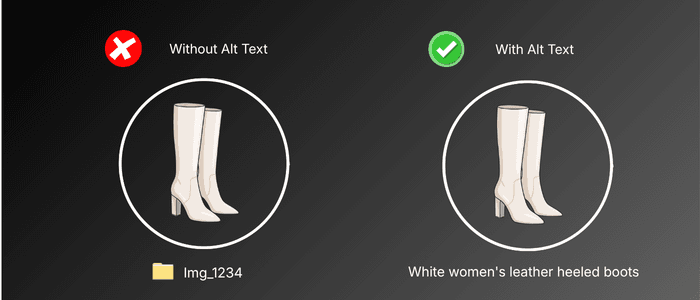
- Use descriptive filenames (e.g. black-nike-air-sneakers.jpg instead of IMG_1234.jpg)
- Add relevant alt tags
- Include clear descriptions
2. Structured data and metadata
These tell search engines exactly what’s in the image:
- Product
- Price
- Availability
Without them, Google can “see” but not “understand.”
3. Image quality
Blurry or overly compressed images reduce your chances of being recognized.
Visual SEO favors:
- Clear
- well-lit
- contextual images (product in real-life use, not just white background)
4. Distribution
Where does your image appear?
If it’s only on your website — that’s not enough.
It should also exist on:
- Social platforms
- Product feeds
- Search ecosystems
Google Merchant Center, Product Graph, and visual discovery
If you’ve seen Google Merchant Center only as an ads tool — it’s time to rethink that.
In 2026, the real power behind visual search is the Product Graph — Google’s massive database of:
- Images
- Prices
- Availability
- Brands
- Product relationships

Merchant Center is one of its main data sources.
When you upload complete product data, you’re not just preparing ads — you’re making your products discoverable across Google’s entire ecosystem, including visual search.
The role of GTIN — your hidden SEO advantage
One of the most underrated elements is the GTIN (Global Trade Item Number).
It acts like a product’s ID.
When you include a correct GTIN:
- Google instantly recognizes the product
- Connects it to other data sources
- Improves visual matching accuracy

For mass products, this often determines whether you appear in Circle to Search results.
Where Google Business Profile fits in
While Merchant Center feeds product data, Google Business Profile adds local and visual context.
With a well-optimized profile, you can:
- Upload real product and store images
- Add products directly
- Collect reviews (text signals for algorithms)
Now imagine this:
A user circles a product → Google searches for matches → shows product results AND nearby businesses selling it.
If your profile is optimized, you can appear at that exact moment.
What this means in practice?
To show up at the right time:
- Use Google Merchant Center as your main product data source
- Add accurate attributes (including GTIN)
- Maintain an active, visually rich Google Business Profile
- Combine product data + local presence
Circle to Search doesn’t rely on one source — it combines images, text, product data, and local signals.
The more high-quality data you provide, the higher your chances of being discovered.
How to adapt your website today (practical steps)
You don’t need a full overhaul — but you do need a strategy.
Ask yourself:
**If someone sees my product in a video, can they find it?
**
Then take action:
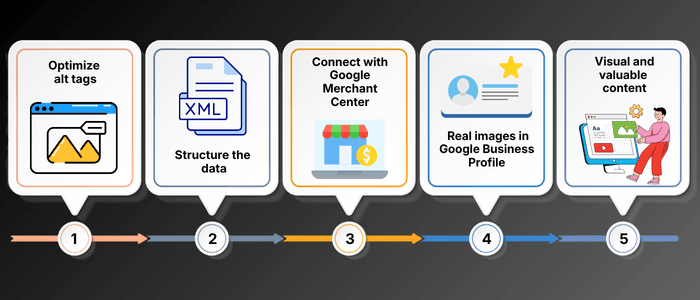
- Review product images (filenames + alt tags)
- Implement structured data
- Upload products to Merchant Center
- Optimize your Google Business Profile
- Think visually — not just text with images, but images that carry value
“Trust at first glance” — the moment that drives the sale
Being discovered is only half the battle.
What happens the moment a user sees your product?
With Circle to Search, decisions are made almost instantly. Users don’t read — they compare.
They look for:
- Price
- Availability
- Delivery speed
If these aren’t clear, they choose a competitor.
Optimization = visibility + conversion
A common mistake is thinking SEO ends when you appear in results.
Reality:
You must also provide structured data (price, availability) that shows instantly in the interface.
That’s the difference between:
“Nice product” → “I’m ready to buy.”
How to win that moment
It comes down to data quality:
- Up-to-date pricing
- Clear availability
- Consistency across site, Merchant Center, and GBP
- Structured product schema
When everything aligns, you don’t just appear — you build trust instantly.
The future of SEO: Less text, more context
SEO is no longer just about reading — it’s about recognition.
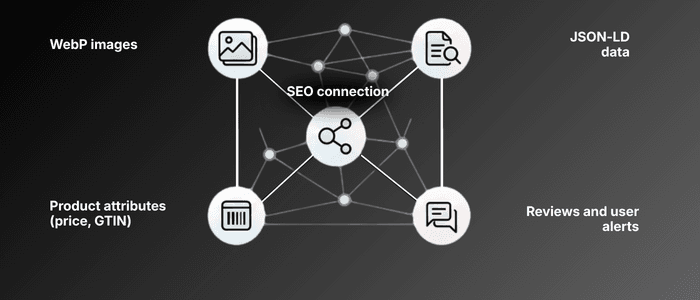
At GrowEasy, we don’t just rank pages — we build a visual identity of your products inside Google’s Product Graph.
The shift is clear:
From keywords → to connected data, images, and behavior.
From content to understanding
In the past, you wrote content to rank.
Today, you build a data ecosystem to be understood.
This includes:
- How your product looks
- How it’s described
- Where it appears
- What users say about it
The better these elements connect, the higher your chances of appearing across search types.
The advantage belongs to those who adapt
Businesses that understand this shift early won’t just get traffic — they’ll control how they appear.
And in a world where decisions happen in seconds, that’s everything.
New SEO = new mindset
“Circle to Search” isn’t just a feature — it’s a new way of thinking about online presence.
Users no longer search with words — they act.
And if your business isn’t ready, you’re losing opportunities every day.
The good news? You’re still early.
Start small:
- Optimize images
- Use Google Merchant Center
- Improve your Google Business Profile
These aren’t complex changes — but they can drive serious results.
If you want to make sure you’re doing it right and stay ahead of competitors, contact GrowEasy for a free consultation.
We’ll help you turn visual SEO into real sales.