
Discover how voice search and AI assistants are changing the way people search online and how to optimize your website for the future of SEO.
Voice Search Optimization: How AI Assistants Are Changing the Way People Search Online
The way people search for information online is changing faster than ever.
Instead of typing short keywords, more and more users are simply asking questions on their phones and smart devices: “What is the best restaurant near me?”, “How can I improve my SEO website?”, or “What are the best marketing agencies?”.
This shift is not just a trend - it is a new reality that is reshaping traditional SEO.
Voice Search Optimization is no longer “the future” of digital marketing - it is the present.
AI assistants like Google Assistant, Siri, and Alexa don’t just find results; they select the most relevant answer. This means businesses must think not only about being visible, but about being chosen.
In this article by Grow Easy, we explore how businesses can adapt to this new reality through strategies that combine SEO, AI, and behavioral user analysis.
What is voice search today?
Voice search is the process where users use voice commands instead of text to search for information online.

Instead of typing “SEO optimization price”, they say: “How much does SEO optimization for a website cost?”. This difference may seem small, but it completely changes how content must be structured.
AI assistants don’t show dozens of results - they choose one or a few best answers. This makes competition for the “position zero” even more important.
How do AI assistants work?
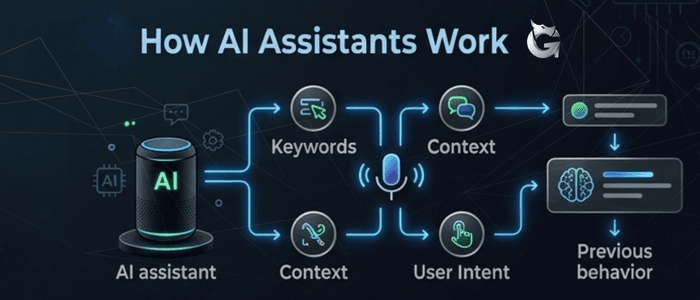
AI assistants analyze not only keywords but also context, intent, and past user behavior. Their goal is to provide a direct, clear, and conversational answer.
At Grow Easy, we see that websites using conversational tone and structured content significantly increase their chances of being selected as a voice answer.
Voice Search Optimization and the shift in SEO strategies
Classic SEO based on short keywords is no longer enough. Voice search requires a different approach - more natural, conversational, and question-oriented.
People don’t search “SEO services Sofia”, they ask “What is the best SEO agency in Sofia?”. This changes how we must think about content.
How are keywords changing?
The focus is shifting toward long-tail, conversational phrases. Instead of optimizing for one word, we must think in full questions and real-life scenarios.
This also increases the importance of well-structured content that directly answers user questions.
Voice Search Optimization and user behavior
Voice search is fast, convenient, and natural. People use it when they are on the go, when they need quick answers, or when they simply prefer speaking instead of typing.
This creates a new type of behavior - “micro-moments”, where users expect immediate and accurate responses.
What does this mean for businesses?
Businesses must anticipate the questions users will ask and create content that directly answers them. It is not just about information - it is about clarity, structure, and usefulness.
Voice Search Optimization and technical SEO factors
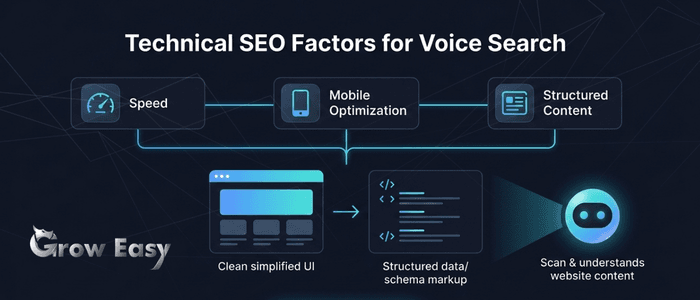
The technical foundation of a website plays a huge role in voice search. Speed, mobile optimization, and structured content are critical factors.
AI assistants prefer websites that are easy for algorithms to understand.
Why is structured data so important?
Structured data (schema markup) helps search engines understand the context of content. This increases the chances of a website being used as a direct answer.
At Grow Easy, we often apply schema optimization as a core element when preparing websites for voice search.
Voice Search Optimization strategies for businesses
To adapt to voice search, a business must change the way it creates content. Instead of short texts and keywords, it must focus on questions and answers.
FAQ sections, conversational blog posts, and local SEO become key tools.
What works best?
Content that clearly answers questions like “how”, “where”, “why”, and “who” has the highest chance of being selected by AI assistants.
Voice Search Optimization and the future of search
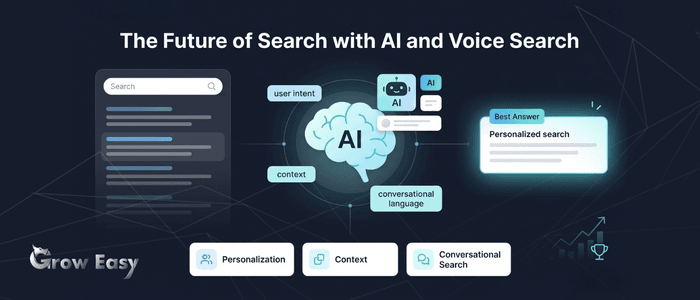
AI no longer just displays results - it interprets intent. This means SEO specialists must think beyond algorithms and focus on human behavior.
Personalization, context, and conversational language will become core ranking factors.
Businesses that adapt early will gain a significant competitive advantage.
Voice Search Optimization as a new SEO standard
Voice search is no longer an addition to SEO strategy - it is a core part of it.
Businesses that invest in optimization for AI assistants don’t just increase visibility; they position themselves as the answer in the future of search.
Understanding user behavior, creating conversational content, and technical optimization are the keys to success.
This is where the right strategic partner makes all the difference.
Do you want to prepare your business for the future of search?
Get in touch with Grow Easy and discover how to optimize your website for voice search and AI assistants.
Let’s fly together!