Google completed its September 2026 spam update on October 8. Here’s how to check your traffic, content and technical issues before making changes.
Google Completes September 2026 Spam Update: What to Check on Your Website?
Google completed its September 2026 spam update on October 8, following its launch on September 24. The rollout lasted almost two weeks and applied globally across all languages.
If your organic traffic dropped during that period, you have probably already asked: “Did the update affect our website?” The answer starts with your data. Matching dates give you a reason to investigate, but they do not establish what caused the decline.
In this article from Grow Easy, we explain where to start, which signals deserve attention and how to avoid rushed changes that could make the situation harder to diagnose.
What Do We Know About the September 2026 Spam Update?
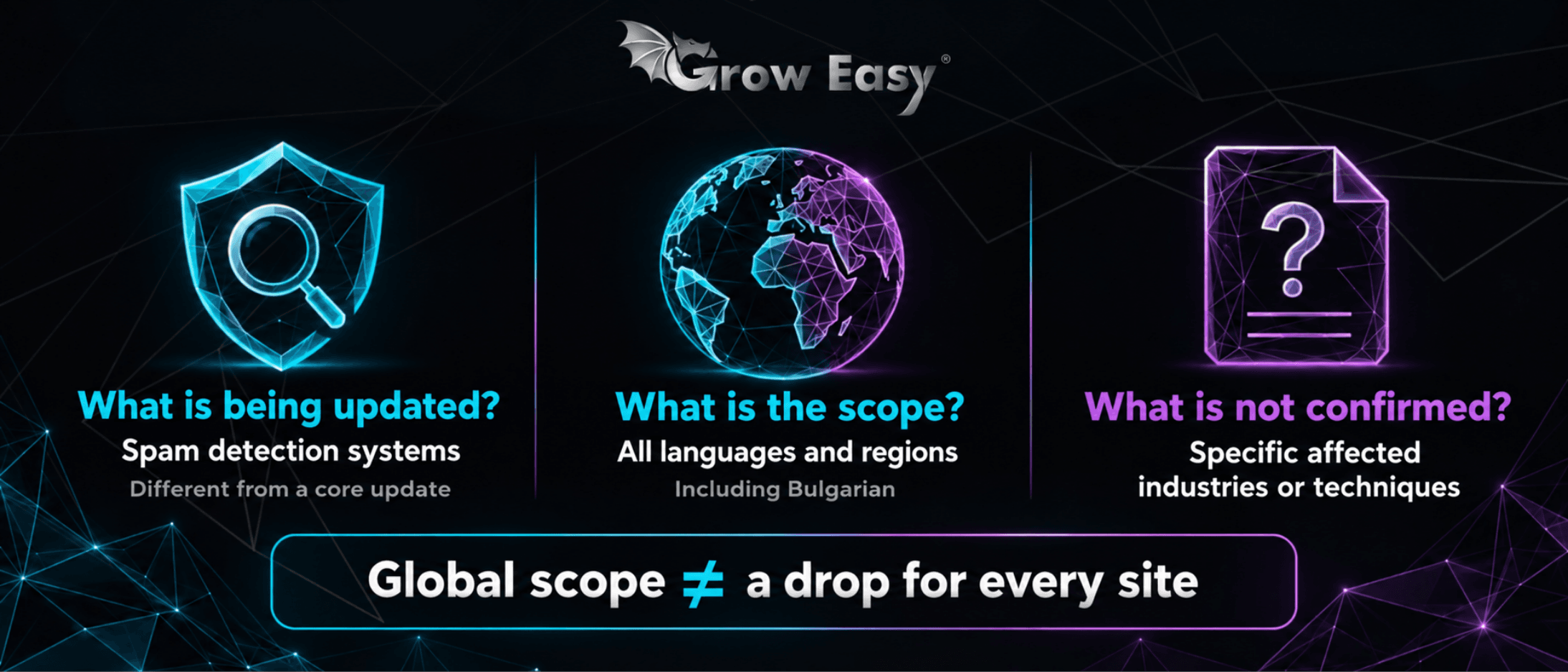
This update improves the systems Google uses to detect spam in search results. It differs from a broad core update, although both can affect a website’s visibility.
Google’s announcement confirms the dates and scope. It does not identify specific industries or provide a list of practices targeted by this particular rollout. Claims such as “Google hit every online store” or “all AI-generated content is now a problem” go beyond the confirmed information.
The global scope means websites in any language may be affected. It does not mean every website should expect a decline, or that every ranking movement during those two weeks came from the update.
Start With Search Console: Where Is the Drop?
Open the Performance report for Search results. Review clicks, impressions, average position and click-through rate, then break the data down by pages, queries, countries and devices.
Compare periods of equal length with similar weekday patterns. We suggest examining the period before September 24, the rollout itself and the available complete days after October 8 separately. For seasonal businesses, add a year-over-year comparison.
Don’t Let the Overall Chart Hide the Problem
A decline may come from one previously successful article, a product category or a wider group of pages.
If impressions remain similar while clicks fall, investigate how your pages appear in search results. If impressions and rankings both decline, explore a broader range of possible causes.
List the pages losing the most clicks and look for shared characteristics. Do they cover the same topic, use the same template or have recent changes in common? Those patterns can help you focus your investigation.
Noticed a drop in your organic traffic? Contact us for a free consultation and find out what's causing it!
Is the Problem in Search or in Your Tracking?
Check your analytics setup alongside your search data. If Search Console clicks remain stable but Google Analytics reports substantially fewer visits, investigate recent changes to tracking code, consent settings or the website itself.
These tools measure different things, so their figures should not match exactly. The useful clues are the direction of the change and when it started. Our Google Analytics services focus on understanding website behaviour and turning measurement into useful reporting.
Ask your team a practical question: “What changed around the date the decline began?” A new template, migration or navigation change may give you a specific issue to investigate.

Are Technical Issues or Warnings Affecting Visibility?
Review Page indexing, Manual actions and Security issues in Search Console. Use URL Inspection to examine a few of the pages that have lost the most traffic.
Look for concrete problems: unavailable pages, an unintended no index directive, blocked crawling or unexpected redirects. If the decline coincides with a technical change, investigate that before rewriting your content.
An empty manual actions report does not rule out an impact from automated systems. Google uses both automated detection and human reviews. Meanwhile, a security warning may point to a compromised website or unwanted content added without the owner’s knowledge.
Which Content Deserves a Closer Review?
Once you have checked the technical side, assess affected pages against Google’s spam policies. The following are general risks, rather than a confirmed list of targets for the September update:
- Large volumes of low-value pages created primarily to manipulate rankings.
- Similar location or service pages that funnel visitors towards the same destination without meaningful differences.
- Unnatural keyword repetition and links intended to manipulate search results.
- Third-party content published primarily to exploit a website’s established ranking signals.
Using AI does not automatically make content spam. Its purpose, quality and usefulness matter.
As part of website SEO, ask concrete questions: Does this page answer the visitor’s question? Is the information accurate? Does it offer something useful beyond a rewrite of content already available elsewhere?
Start with the pages showing a clear decline, then check whether the same problems appear across other sections.

What Should You Avoid After an Update?
Avoid deleting dozens of pages simply because traffic has dropped. Changing every title at once or adding more keyword repetitions also makes it harder to understand what is happening.
Our recommendation is to record a clear reason for every change. “These pages repeat the same service information without helping visitors choose” is a useful finding. “There was an update” is not a diagnosis.
Save your baseline data, prioritise confirmed problems and document your changes. At the next review, you will have a clearer basis for assessing progress instead of guessing which of several simultaneous edits made a difference.
When Might You See Results?
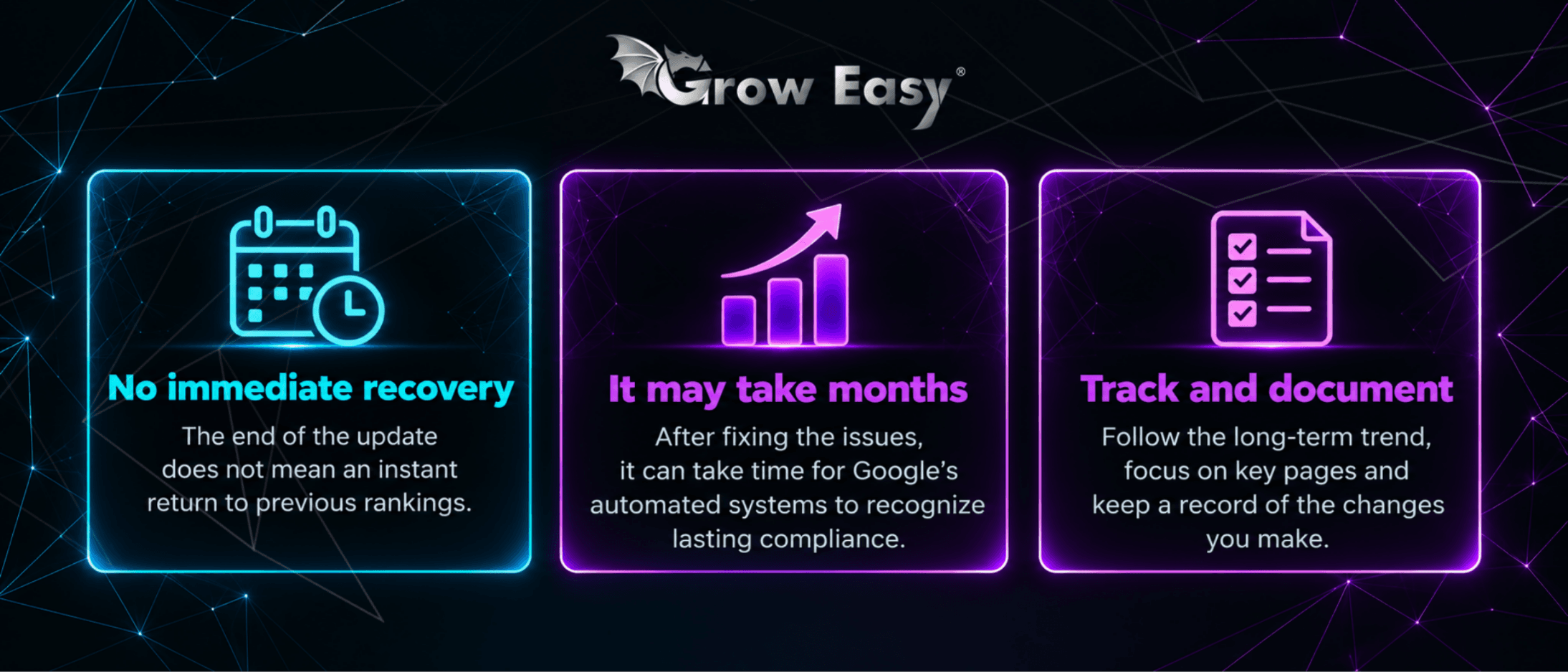
The end of a rollout does not mean affected websites immediately recover. Google explains that, after spam violations are corrected, its automated systems may take months to recognise sustained compliance.
There is no universal recovery timeline or guarantee that previous positions will return. Monitor longer-term trends and the performance of important pages rather than treating every daily movement as a success or failure.
Keep a dated change log, especially when several people work on the website. It gives everyone the same reference point when reviewing results.
Turn a Traffic Drop Into a Practical Action Plan
The September 2026 spam update is complete, but the same investigation process remains useful after future changes: locate the decline, check measurement, investigate technical issues and review content.
For your business, the priority is understanding which lost visits previously generated enquiries and sales. Start with the pages that matter most to those outcomes.
If your traffic has dropped and you are unsure where to begin, contact us for a free consultation!
Share your website, the dates of the decline and the affected pages so we can discuss what the data shows and which actions deserve priority.