
Google simplifies website visits from YouTube Shorts and Gmail ads. Discover what's changing in Demand Gen and how to optimize your campaigns.
Google Makes It Easier to Visit Websites from YouTube Shorts and Gmail Ads. What's Changing in Demand Gen?
You see an interesting product in an ad, tap the image, and expect to explore the offer. Every extra step between those two actions is another opportunity to lose interest. For businesses, this means that an attractive ad creative is only the beginning. How easily someone can reach your website matters just as much.
Google has introduced a more direct way to access landing pages from image ads in YouTube Shorts and Gmail. With the affected Demand Gen formats, users can reach a website with a single tap.
In this article from Grow Easy, we'll explore what Google has announced, which advertising assets you should review, and how to assess whether a shorter path to your website delivers valuable visits for your business.
What Has Google Announced for Demand Gen?
On September 24, 2026, Google announced this change as part of its September Demand Gen update. The announcement describes a feature that allows users to open a landing page with a single tap on image ads in YouTube Shorts and Gmail.
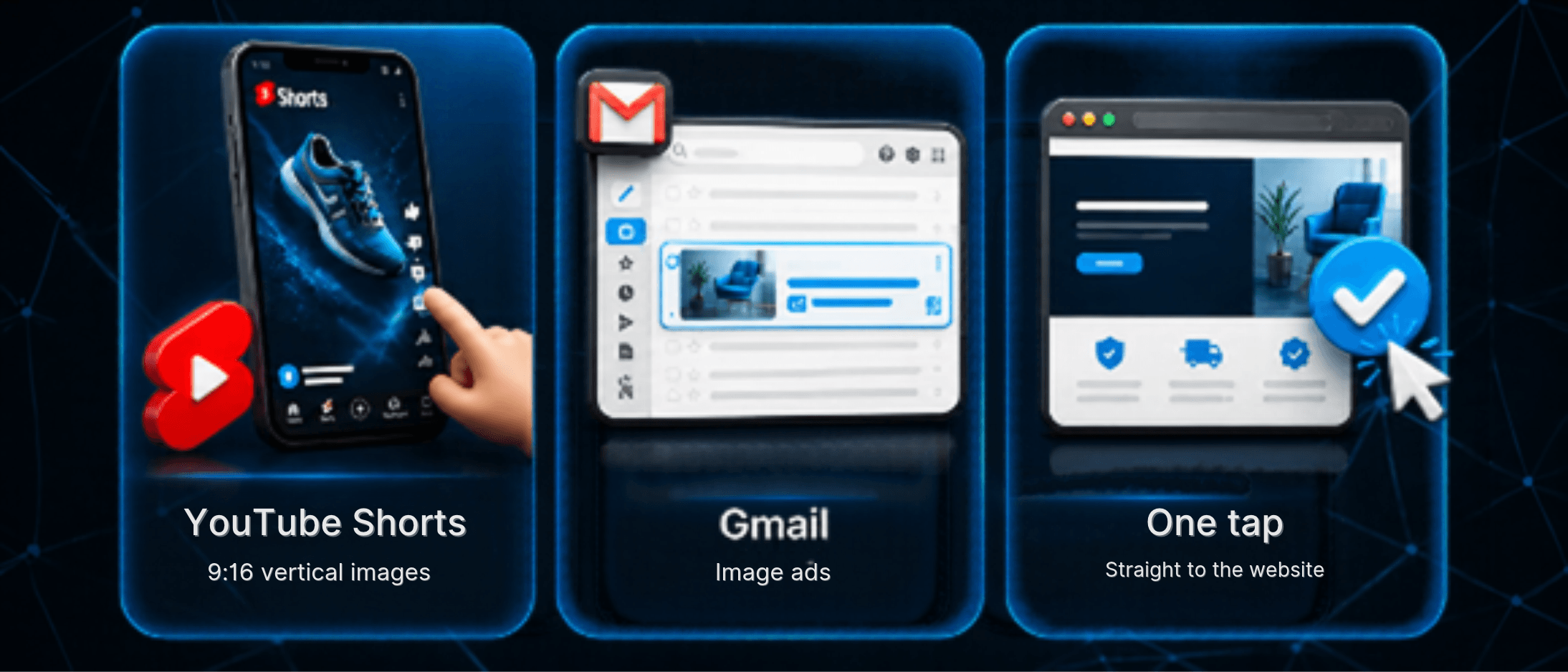
For Shorts, Google specifies a particular requirement: uploaded 9:16 vertical images that fill the available ad space. In Gmail, the change makes it easier for users to navigate directly from an ad to the advertiser's website.
This update applies to specific advertising formats. It does not mean that every video ad, button, or interaction across these two platforms will now behave in exactly the same way.
When planning your Google Ads campaigns, the practical approach is to review your existing creative assets, ad placements, and previews within your advertising account.
Which Images Work Best for YouTube Shorts?
YouTube Shorts is a vertical environment, so your ads should be designed for the way people view content on their phones. A square image placed within a taller advertising space is not the same as an image created specifically for a full-screen experience.
In its current Demand Gen specifications, Google recommends a resolution of 1080 × 1920 pixels for 9:16 images. The stated minimum resolution is 600 × 1067 pixels.
Leave Enough Space for Interface Elements
Avoid placing important information, such as prices, logos, or your main message, too close to the edges of the image. Buttons and other interface elements can make this content difficult to read.
Check the ad preview and examine the creative on an actual smartphone. Within a few seconds, users should be able to understand what you're offering and why visiting your website is worth their time.
If you're already using YouTube advertising, review your images and videos separately. This update provides a good opportunity to add suitable static creatives to your strategy when they communicate your offer clearly.
What's Changing for Gmail Ads?
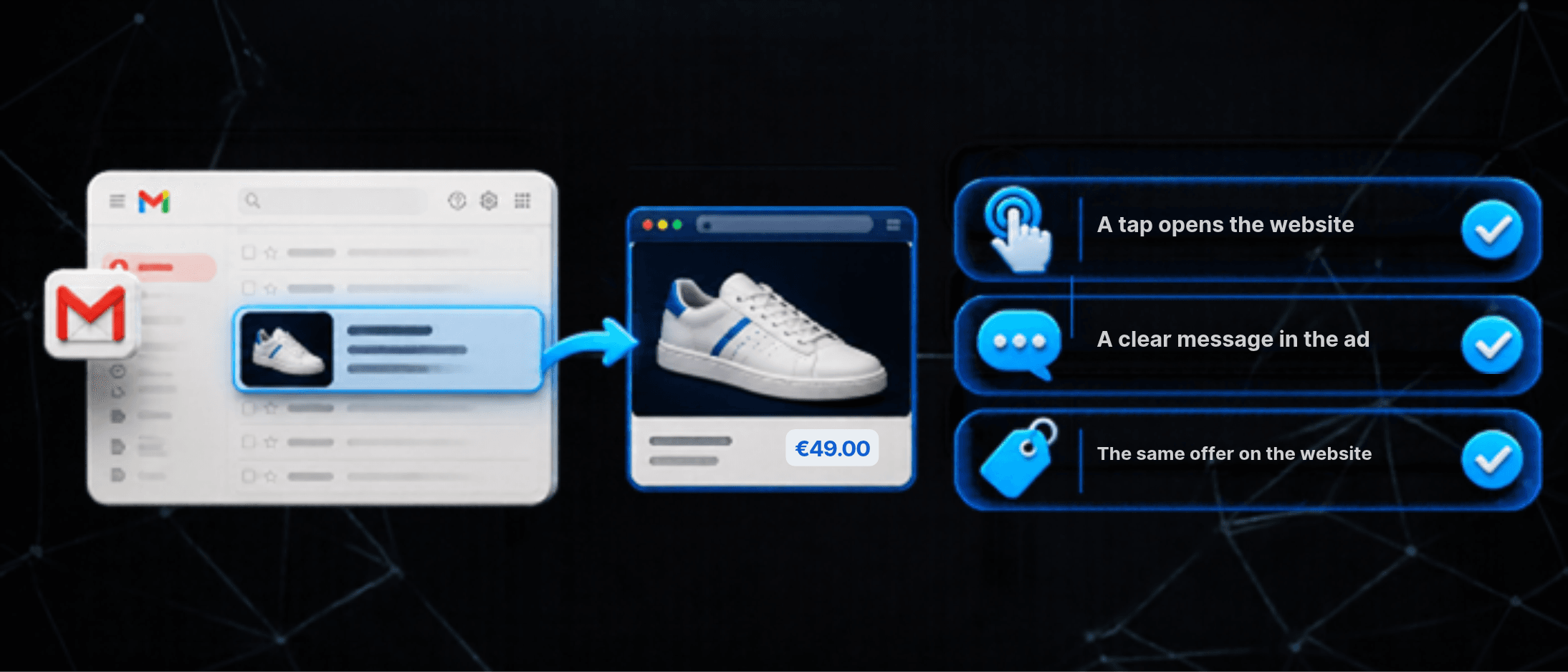
For image ads in Gmail, Google describes a more direct way for users to access the landing page. Demand Gen reporting documentation also indicates that tapping the ad teaser in Gmail opens the advertiser's landing page or a specific product page for the relevant formats.
When preparing your ads, this means your short message should set the right expectations before someone visits your website.
If you're promoting a specific discount, for example, users should be able to find that same offer easily after opening the page.
Avoid headlines that generate curiosity without clearly explaining the offer. They may attract visitors who quickly discover that the landing page doesn't match what they expected.
Does a Shorter Customer Journey Mean More Sales?
More direct access to your website can make visiting easier, but it doesn't guarantee a purchase or an enquiry.
Between opening a landing page and completing an action, users still need to make several decisions. Is the offer easy to understand? Is the price convincing? Is the ordering process straightforward?
Imagine an ad promoting a home care product bundle. The image displays three products and a specific price, but the link takes users to a general category page containing dozens of items.
The visitor has reached your website, but they still need to find the advertised bundle themselves.
A better approach is to direct users to a landing page that continues the exact offer presented in the ad.
For a service, this might be a clear description with an enquiry form. For a product, it could be the specific item or bundle featured in the creative.
What Should You Check on Your Landing Page?
Open the advertising URL on your phone without relying on a page you've previously loaded in your browser.
Follow the experience of a first-time visitor. Pay attention to what appears on the screen and how easily users can reach the primary action.
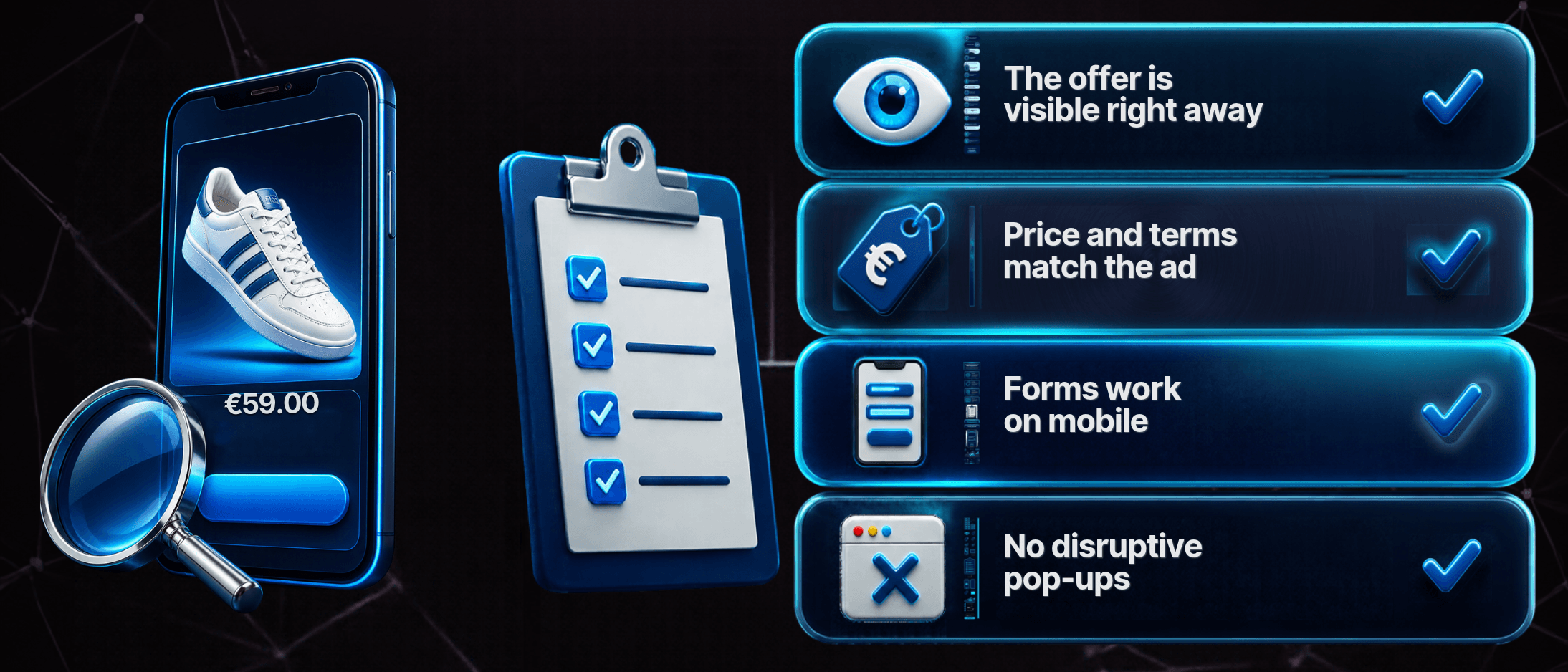
Start with four questions:
- Is the advertised offer immediately visible on the landing page?
- Do the price, terms, and availability match the ad?
- Do the buttons, forms, and checkout process work properly on mobile devices?
- Are there any pop-ups that make browsing difficult?
Check What Happens After Users Click the Button
A form may look professional but still return an error when someone tries to submit it. This interrupts the entire customer journey.
The same applies to a product that cannot be added to the shopping cart or a required field that's difficult to complete on a small screen.
Submit a test enquiry or go through the checkout process up to an appropriate stage.
This allows you to evaluate how your website actually works instead of judging the landing page only by its appearance.
How Can You Measure Whether the Change Helps?
Start by defining a clear objective: a sale, a qualified enquiry, or another action that creates value for your business.
Then make sure that action is being tracked correctly.
With a properly configured Google Analytics 4 setup, you can monitor user behaviour after visitors arrive on your website.
Look at website visits alongside the actions people take afterwards. For lead generation campaigns, consider the quality of enquiries as well as their volume.
More clicks without an increase in valuable actions should prompt you to review your audience, advertising message, and landing page.
However, this alone isn't enough to prove that the format is either successful or unsuccessful.
When comparing performance, use similar time periods and conditions.
If you change your budget, offer, target audience, and creative assets simultaneously, it becomes difficult to identify which factor influenced the results.
Make the Next Tap More Valuable for Your Business
The latest Demand Gen capabilities provide a useful opportunity to review the entire journey from your advertisement to your website.
Prepare vertical images for YouTube Shorts, refine your messaging for Gmail, and make sure your landing page delivers what your ad promises.
Start with a limited test and use the results to decide where to expand your efforts.
The greatest value comes from connecting relevant advertising, a clear offer, and measurable business actions.
At Grow Easy, we focus on building that connection between advertising creatives, campaign performance, and business results.
If you'd like to explore how Demand Gen could fit into your marketing strategy, get in touch with our team.
Let's make sure that a shorter path to your website leads to an offer your customers understand and have a reason to choose!
