
Sundar Pichai announced the shift to “Agentic Search.” See how Project Jarvis will transform your business and how to optimize websites for AI in 2026.
Google Jarvis: How SEO Evolves into Agentic Search
On April 8, 2026, Sundar Pichai did more than make a statement—he marked the beginning of the biggest transformation in search since Google was created.
In an interview that shook the SEO industry and digital marketing, he stated clearly:
“Search is no longer about finding information, but about accomplishing intent.”
This is not just an evolution. It’s the end of the familiar model.
For 20 years, Google was a “library”—a place where users search, compare, and decide.
Today, it is becoming an execution agent that not only understands what you want, but does it for you—from the first search to the final action.
Imagine a world where the customer never visitsyour website, yet still makes a purchase. A world where decisions are made by AI, not the user.
This is not the future—it’s already reality.
Is your business ready for this shift?
Keep reading this GrowEasy article to understand how Project “Jarvis” will rewrite the rules of online presence—and how you can be among the first to adapt.
What Is Project “Jarvis” and Why Does It Change the Rules?
From Search Engine to “Execution Agent”
If Google used to be a tool that showed you what to do, Project “Jarvis” is built to do it for you.
According to information from The Verge and 9to5Google, Jarvis is a so-called Computer-Using Agent (CUA)—an AI that doesn’t just generate answers but acts directly in the browser.
With your permission, it can:
- open websites
- click buttons
- fill out forms
- compare products and prices
- complete purchases
In other words, Jarvis “sees” and uses the internet the same way you do—but much faster and without hesitation.
Imagine this: instead of opening 6 tabs, reading reviews, and comparing offers, you simply say:
“Find me the best laptop under 2000 BGN and order it.”
Jarvis will go through the entire process—from research to payment—without your active involvement.

This is a fundamental shift:
- from search → to action
- from choice → to automation
We are entering the era of automated sales powered by a new kind of SEO.
The Difference Between AI Overview and Agentic Search
You might be thinking: “Isn’t this just the next version of AI results?” — Not quite.
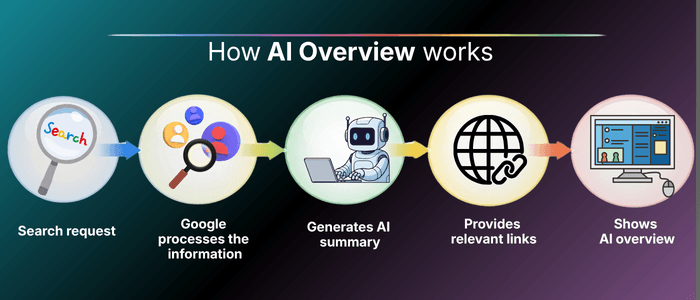
Features like AI Overview (known from 2024–2025) changed how we receive information—they summarize, analyze, and provide ready answers.
But the decision was still in the user’s hands.
With Agentic Search and Jarvis, something much deeper is happening:
AI Overview tells you what to do. Jarvis does it for you.

This is the difference between:
“Here are the 5 best hotels” and “I’ve booked the best hotel for you based on your preferences.”
This is where the rules of the game change.
Because when AI starts acting, visibility no longer means clicks—it means trust from the algorithm.
And that raises a new question for every business:
Will your website be chosen by Jarvis… or completely bypassed?
What Does the “User Journey” Look Like in the Jarvis Era?
The Disappearance of the “Ten Blue Links”
For decades, user behavior followed a clear model:
search → results → click → compare → decide
The so-called “10 blue links” were the battlefield where businesses competed for attention.
After the introduction of AI Overviews (AIO), this model began to break down. Users increasingly received direct answers without clicking.

2026: The Evolution to ASO (Agent Search Optimization)
With the rise of Agentic Search and Jarvis, “zero-click” evolves into something far more drastic: direct conversion behavior.
The path to purchase becomes shorter.
The customer may not spend 10 minutes browsing—but still completes a purchase thanks to the data we have optimized on your website.
The entire process—from intent to action—happens within Google’s ecosystem.
According to analyses by Search Engine Land and industry sources, AI is no longer just an information intermediary, but an active participant in decision-making.
This is the rebirth of SEO.
We are no longer optimizing for an algorithm that ranks links—but for intelligence that performs actions.
Your website is no longer just a business card—it is infrastructure from which AI extracts trust.
What This Means for Business: Challenges and Opportunities
Should We Optimize for “Search Agents”?
The short answer: yes—and immediately.
With the rise of Agentic Search, a new discipline emerges: ASO (Agent Search Optimization).
If SEO is optimization for ranking in search results, ASO is optimization for selection by an AI agent.
That’s a fundamental difference.
You’re not just competing for position in Google. You’re competing to be the action Jarvis chooses to execute.
Here, the algorithm doesn’t ask:
“Who is most relevant?” It asks: “Who can I trust to complete this task on behalf of the user?”
The Risk of Direct Conversions
One of the biggest shocks for businesses will be that traffic may drop… drastically.
But that doesn’t mean a drop in sales. Quite the opposite.
In the “zero-visit” economy:
- users don’t visit websites
- AI agents make decisions for them
- conversions happen directly within the platform
This flips the entire digital marketing model.
Instead of fighting for clicks, you fight for trust from the AI system.
Businesses that don’t adapt risk becoming invisible—not because they lack a good product, but because they are not “understandable” to the agent.
The New Role of APIs and Structured Data
In the world of Agentic Search, design and text are no longer enough.
Jarvis doesn’t “read” your website like a human. It communicates through data.
That’s why Google is pushing businesses toward:
- clearly structured information
- accessible and up-to-date data
- the ability to perform direct actions via systems and APIs
Standards like Schema.org Actions come into play, allowing AI agents to book, purchase, and request services directly through your site—without a visual interface.
In other words, technical SEO becomes the language your business uses to “talk” to Jarvis.
The New Role of SEO Specialists: Translators Between Business and AI
In the era of Agentic Search, the role of the SEO specialist does not disappear—it transforms and becomes more critical than ever.
Why?
Because we are no longer optimizing content just for people or ranking algorithms.
We are optimizing for an AI agent that must:
- understand your business
- trust it
- act on your behalf
SEO specialists become much more than optimizers—they become “translators” between human business and machine decision-making.
Their role includes:
- structuring data so it is understandable by Jarvis
- building trust through E-E-A-T signals
- creating clear “action paths” the agent can execute
- connecting technical infrastructure (APIs, schema) with real business goals
In this new world, the question is no longer:
“How do we rank higher in Google?” But: “How do we get chosen by AI when it makes decisions instead of the customer?”
Adaptation Strategies: How to Become Jarvis’s “Preferred Choice”
Authority (E-E-A-T) as a Trust Filter
In a world where AI makes decisions, the most valuable resource is no longer traffic—it’s trust.
The E-E-A-T concept (Experience, Expertise, Authoritativeness, Trustworthiness) becomes the main filter through which Google decides:
“Who can I trust to complete this task on behalf of the user?”
In the AI agent era, keywords give way to:
- real experience
- proven expertise
- strong reputation
- consistency in quality
Jarvis won’t choose the best-optimized website—but the most trusted one.
SEO is no longer just a “storefront sign”—it’s a direct connection to the customer’s personal assistant.
Integration with Google’s Ecosystem
Google is updating its SEO guidelines regarding AI-generated content.
To be “visible” to Jarvis, you must be current, synchronized, and accessible in real time.
This includes:
- maintaining accurate prices and availability
- an active and optimized Google Business profile
- connectivity across channels (website, maps, products)
The AI agent won’t wait. It will choose a business that can provide a clear and immediate answer.
If your information is outdated or incomplete—you’re simply out of the selection.
Are You Ready for Google’s “Autopilot”?
The shift to Agentic Search is not just a technological innovation—it’s a fundamental change in how people discover, choose, and buy.
In a world where AI acts on behalf of the user, winners are not those with the most traffic—but those most accessible to the algorithm and most trusted by people.
Jarvis won’t ask “who ranks #1 in Google,” but:
“Who is the safest choice for this task?” This means new rules, new strategies, and a new type of online presence.
The question is no longer whether you will adapt—but how fast.
The truth is, this requires more than basic SEO. It requires a new generation of technical and strategic optimization.
At GrowEasy, we are already preparing our projects for Jarvis by implementing:
- advanced Schema structures
- real-time API integrations
- clear “action” signals that allow AI to perform actions directly
This means our clients won’t just be present online—they will be recognizable, understandable, and selectable by AI agents.
Is Your Website Ready for the Jarvis Era?
Take the next step today with a GrowEasy 2026 audit and find out whether your business is prepared not just to be found—but to be chosen.